September 11 this year is R U OK? Day. Perhaps you’ve noticed a loved one struggling recently. But how do you have a conversation that can change a life?
Mental health conditions will affect around 45% of Aussies at some point in their life, and affect 1 in 5 Aussies every year. Chances are, someone you know is struggling at the moment with their mental health–or several someones.
However, many people–understandably–find broaching the subject of mental health to be difficult. We might put off a tricky conversation for fear of upsetting or angering someone, appearing nosy, or making someone feel even worse.

However, many people who experience poor mental health also experience loneliness and diminished social connections. If you ask someone how they’re really doing, show you care, and stick around for follow-up questions, chances are they’re going to be touched by your concern. A conversation can truly change–and maybe even save–a life.
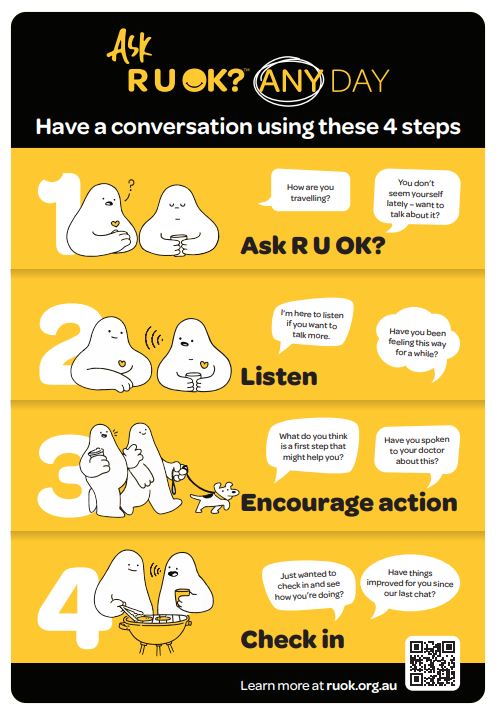
How to Have A Conversation That Changes a Life:
| 1. Ask R U OK?: Try to be relaxed, friendly, and concerned. You might ask general things like:“How are you going?” or “What’s been happening?”You can also specifically name something that’s got you feeling concerned, e.g., “You seem less talkative than usual. How are you going?”Don’t criticise them if they don’t want to talk. You could say:“Please call me if you ever want to chat” or “Is there someone else you’d rather talk to?” 2. Listen with an open mind: Don’t interrupt or rush them. Try to listen without judgement. Try to sit with any silences and acknowledge how tough things have been (i.e., reflective listening). Some good follow-up questions include: “How are you feeling about that?” or “How long have you felt that way?” 3. Encourage action: Ask what they’ve done in the past in similar situations and how they’d like you to support them. If they’ve been feeling down for longer than two weeks, encourage them to see a health professional (a GP is a great place to start as they can arrange a mental health care plan). If you’re concerned they might be suicidal, contact Lifeline (13 11 14) for crisis support. If life is in danger, call 000. 4. Check in: Pop a reminder in your calendar to check in with them again, sooner if they’re really struggling. Stay in touch and be there for them as much as you can. |